Retro Track Player
First Impressions: Bold, Nostalgic, and Instantly Recognizable
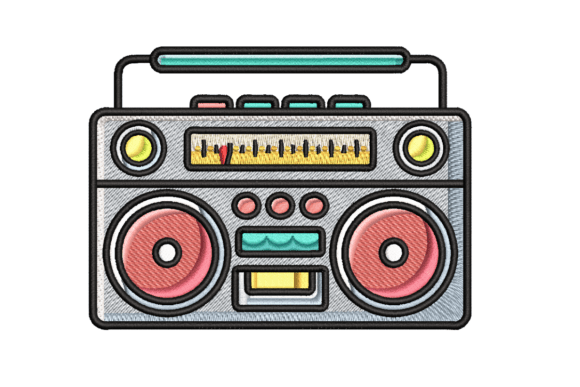
As an embroidery designer who’s stitched hundreds of boutique apparel projects—from limited-run hoodies to seasonal capsule collections—I opened Retro Track Player expecting retro charm. What I got was something sharper: a confident, rhythm-driven graphic with strong visual hierarchy and intentional neon energy. The boombox isn’t just nostalgic—it’s *present*. Large speakers anchor the composition, while the tuner display adds fine detail without overcomplicating the silhouette. This isn’t a watered-down icon; it’s a machine embroidery design built for impact.
How It Lives on Real Sweatshirts
Retro Track Player thrives on contrast—and that’s where it shines across fabric palettes. On heather gray or oatmeal sweatshirts, the neon-accented thread colors pop with quiet confidence—ideal for a boutique brand balancing heritage texture with modern edge. On charcoal or black fabric, the design gains depth and dimension: the speaker grilles read clearly, the tuner lines stay crisp, and the overall mood shifts from playful to effortlessly cool. Even on soft pastel sweatshirts—think mint, blush, or butter yellow—the bold outline and strategic color blocking keep Retro Track Player legible and intentional, never washed out.
Oversized hoodies? Absolutely. The design’s horizontal emphasis and generous speaker width translate beautifully to chest placement without crowding the neckline. For sleeve accents or back designs, its clean outer contour makes scaling down (to ~3.5”) or up (to 5.5”) feel natural—not stretched or pixelated. And because the layout avoids ultra-thin lines or tiny internal text, it holds up on cozy, brushed fleece and heavyweight French terry alike—no ghosting, no skipped stitches.
Stitch Personality & Practical Embroidery Fit
This is a design with *stitch density* that respects both fabric and function. From the outset, you can tell it wasn’t digitized for flat vinyl or screen print—it breathes like embroidery should. The speaker cones use gentle satin fill with subtle direction shifts to mimic texture, not flat color. The tuner display relies on precise running stitches and small satin bars—not dense fill—which means less bulk, better drape, and easier stabilizer management.
For sweatshirt embroidery, I recommend medium-weight cutaway stabilizer paired with light tear-away on top for smoothness—especially on loopier fleece backs. That said, if your fabric has high pile or uneven texture, test stitch first: the design’s clarity depends more on stabilization than extreme density, which works in your favor. No need for heavy backing that stiffens the garment. And yes—it’s durable enough for repeated washing, provided standard embroidery care instructions are shared with customers.
Hoop Size & Placement Flexibility
The native layout fits comfortably in a 5” x 7” hoop—ideal for chest placement on adult unisex sweatshirts and hoodies. But here’s what matters more: its balanced proportions mean it adapts cleanly to smaller hoops (4” x 4”) when scaled thoughtfully for youth sizes or sleeve placements. Just avoid shrinking below 3”, where the tuner details begin to soften. There’s no micro-detail trap here—Retro Track Player was clearly built for real-world commercial embroidery, not desktop novelty.
Brand Voice, Visual Trust, and Customer Connection
For small shop owners and Etsy sellers, every stitch carries brand weight. Retro Track Player reads as handmade but polished—neither overly crafty nor sterile. It lands squarely in the “playful premium” zone: nostalgic enough to spark joy, bold enough to signal intentionality. That balance builds buyer trust fast. When shoppers see this on your product photography—styled with vintage denim, retro sneakers, or minimalist layering—they don’t just see a sweatshirt. They see a lifestyle cue, a mood, a shared cultural wink.
That resonance extends to digital touchpoints too. Whether dropped into a printable mockup for your Etsy listing or layered into a social carousel, Retro Track Player delivers instant visual recognition. Its strong shape reads at thumbnail size. Its color story invites cohesive styling—pair it with matching neon-thread beanies or cassette-themed packaging, and you’ve got a full design ecosystem, not just a single embroidery file.
Who This Design Serves Best
- Small clothing brands launching curated drops—its retro energy stands out in crowded feeds without shouting.
- Etsy sellers building seasonal collections—works year-round, especially strong for fall launches and spring refreshes.
- Embroidery shops offering custom apparel—low-risk digitization, high-return visual appeal, minimal client revision requests.
- Handmade business owners who value authenticity—this feels human-made, not algorithm-generated.
- Crafters and creative entrepreneurs expanding into apparel—clear structure, forgiving scale range, and intuitive thread logic make it beginner-welcoming but pro-respectful.
A Note on Readiness & Next Steps
Retro Track Player arrives ready—but “ready” doesn’t mean automatic. Always verify hoop size compatibility with your machine before production. Check thread color recommendations against your brand palette; those neon accents work best with high-sheen polyester threads for true vibrancy. And while the design avoids fragile elements, confirm stitch count and underlay settings if you’re batching large orders—some machines benefit from slight density tweaks depending on fabric thickness.
This isn’t just another music-themed embroidery file. It’s a versatile, emotionally resonant design asset—one that elevates sweatshirt embroidery from decoration to storytelling. When your customer pulls on a hoodie featuring Retro Track Player, they’re not just wearing apparel. They’re tuning in.