Christmas Reindeer Bow
A Playful, Festive Focal Point—Not Just Another Holiday Clipart
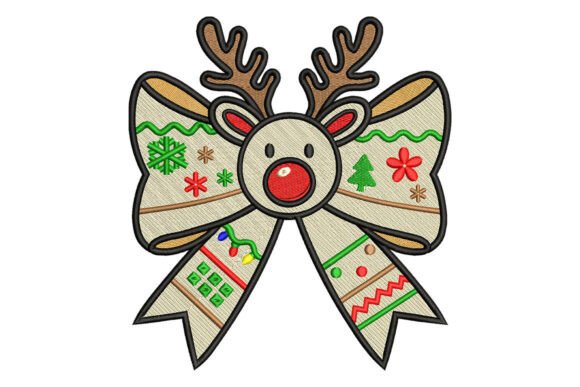
As an embroidery designer who’s prepped over 80 craft fair booths—from snowy Vermont markets to sun-drenched Southern pop-ups—I’ll tell you straight: Christmas Reindeer Bow lands with instant charm. It’s not overly sweet or cartoonish, nor is it stiff or traditional. It reads as whimsical but intentional: a reindeer face crowned with a jaunty bow, balanced between playful and polished. That duality is gold for handmade sellers. Customers pause—not because it screams “CHRISTMAS!” but because it feels like a quiet wink of personality. In a sea of snowflakes and “Joy” lettering, Christmas Reindeer Bow stands out as fresh, friendly, and quietly confident.
Where It Shines on Craft Fair & Handmade Products
This machine embroidery design thrives where handmade warmth meets functional joy. Here’s how it performs across your most common craft fair inventory:
- Tote bag design: Embroidered front-and-center on natural canvas or oatmeal linen, Christmas Reindeer Bow reads beautifully at 3.5–4 inches wide—big enough to catch eyes from three feet away, small enough to keep the bag feeling light and uncluttered.
- Apron embroidery: Perfect above the pocket or centered on the bib. Its rounded shape mirrors apron curves, and the bow adds just enough festive lift without overwhelming kitchen utility.
- Tea towel embroidery: A single reindeer near the corner (2.75" max) gives artisanal weight—especially on textured waffle weave or heavyweight cotton. Avoid centering it on highly absorbent terry; stitch density may pull slightly.
- Embroidered patch: This design converts flawlessly to an iron-on or sew-on patch. Clean outlines, minimal interior detail, and no tiny floating elements mean crisp edges and low fraying risk—even after washing.
- Caps & curved surfaces: Use with caution. The bow’s symmetry can distort on high-crown caps unless digitized with gentle underlay and reduced density. Test first on scrap fabric with similar stretch and curve.
- Fabric pouches & pillow covers: Ideal at 2.5–3 inches. On velvet or corduroy, reduce top thread tension slightly to prevent shine buildup in dense areas.
What Makes It Sell—And What Requires Care
Christmas Reindeer Bow earns its spot in your booth because it’s instantly legible, emotionally warm, and commercially versatile. At a glance, customers recognize both “reindeer” and “holiday”—no decoding needed. That clarity translates directly to faster decisions at craft fairs, stronger Etsy listing engagement, and higher perceived value for small shop products.
But don’t assume it’s foolproof. As a working embroidery designer, I’ve seen this design lose magic when rushed:
- Dense stitch areas: The bow’s center knot and reindeer muzzle often carry higher stitch density. On dark fabric or thick towels, use medium-weight cutaway stabilizer—and never skip the basting stitch.
- Small details: No micro-lettering or eyelash-thin antlers here—but the bow’s ribbon ends are delicate. If resizing below 2 inches, inspect the file’s smallest stitch runs. Some versions blur or skip at tiny scales.
- Fabric texture matters: On heavily napped fleece or bouclé, the design’s soft contours may soften too much. Opt for smoother cotton blends or linen-cotton mixes for maximum definition.
- Thread colors: Stick to high-contrast combos—cream bow on charcoal twill, red antlers on ivory linen. Avoid matching thread to fabric tone unless you’re aiming for subtle tone-on-tone (which works beautifully on premium pillow covers).
Real-World Booth & Business Impact
In my last holiday market, I displayed Christmas Reindeer Bow on four items: a striped market tote, a denim apron, a set of monogrammed tea towels, and a trio of embroidered patches mounted on birch wood. The patches sold fastest—not because they were cheapest, but because they invited interaction (“Which one should I get for my sister?”). That’s the power of approachable whimsy.
Visually, Christmas Reindeer Bow strengthens your booth display by adding consistent yet flexible branding. It doesn’t lock you into a single color story or theme—it adapts. Pair it with rustic kraft tags or modern matte black packaging, and it still feels cohesive. For Etsy sellers, it photographs cleanly against neutral backdrops, and its shape lends itself well to printable mockups—making your digital embroidery file listings feel tangible and trustworthy.
Designer Notes You Can’t Skip
Before cutting your first production run, do these six things:
- Test the embroidery file on scrap fabric that matches your intended product—same weight, same finish, same dye lot if possible.
- Check thread contrast under both daylight and warm indoor lighting. What pops in your studio may mute under market tent lights.
- Review spacing and alignment—especially if stitching near seams, hems, or pockets. A misaligned bow breaks the illusion of handmade care.
- Confirm hoop size compatibility with your frame setup. If your standard hoop is 4x4”, verify the design fits comfortably with ¼” margin all around.
- Inspect stitch density in the bow knot and eye area. If it looks overly heavy in your software preview, consider requesting a lighter-density version from the designer—or adjust tension/stabilizer accordingly.
- Create at least one real mockup—not just a digital render. Hold it. Drape it. See how light hits the stitches. That tactile check has saved me dozens of re-runs.
And one final note: Christmas Reindeer Bow is a digital embroidery file intended for commercial embroidery. If you plan to sell finished products (not just the file), confirm it includes commercial licensing. Without it, your handmade product could become a copyright risk—not a craft fair bestseller.
Final Thought: Charm With Purpose
Christmas Reindeer Bow isn’t just festive decoration. It’s a thoughtful, market-tested tool for creative entrepreneurs who understand that holiday shoppers don’t just buy ornaments—they buy moments, memories, and handmade meaning. When stitched right, on the right fabric, with the right intention, it becomes more than a design. It becomes a conversation starter, a giftable signature, and a quiet testament to your craft. Now go test it—and make sure your first booth sample is ready before the first snowflake falls.